
The 2025 Complete Worm Composting Guide: Everything You Need to Know
TL;DR: This comprehensive 2025 guide covers everything: choosing worms, setting up bins, feeding schedules, troubleshooting, harvesting castings, making worm tea, and advanced techniques. Perfect for beginners and experienced composters alike. Bookmark this as your go-to vermicomposting resource!
Welcome to the World of Vermicomposting
Vermicomposting - using worms to transform kitchen scraps into nutrient-rich compost - has exploded in popularity. And for good reason! It's sustainable, produces incredible fertilizer, reduces waste, and is surprisingly easy once you understand the basics.
This 2025 guide compiles everything we've learned from thousands of successful vermicomposters. Whether you're just starting or looking to optimize your existing system, you'll find actionable advice here.
Part 1: Getting Started
Choosing Your Worms
Red Wigglers (Eisenia fetida)
- Best for: Indoor bins, kitchen scraps
- Temperature range: 55-77°F
- Reproduction rate: Fast (double every 2-3 months)
- Composting speed: Excellent
- Recommended for beginners!
African Night Crawlers (Eudrilus eugeniae)
- Best for: Outdoor beds, fishing bait
- Temperature range: 45-70°F
- Reproduction rate: Moderate
- Composting speed: Good
- Larger size, deeper burrowing
African Nightcrawlers (Eudrilus eugeniae)
- Best for: Warm climates only
- Temperature range: 65-85°F
- Reproduction rate: Very fast
- Composting speed: Excellent
- Not cold-hardy!
Our Recommendation for Florida: Red wigglers for indoor bins, African Night Crawlers for outdoor composting.
How Many Worms Do You Need?
Basic Formula: 1 lb of worms per 1 lb of food scraps per day
Household Size Guide:
- 1-2 people: 1 lb of worms (1,000-1,500 worms)
- 3-4 people: 2-3 lbs of worms
- 5+ people: 5 lbs of worms
Start Smaller: It's better to start with fewer worms and let them reproduce than to overwhelm a large population with insufficient food.
Choosing a Bin
DIY Options:
- Plastic storage containers ($10-20)
- Wooden boxes ($20-40)
- Stacked tote system ($30-50)
Commercial Options:
- Flow-through systems ($150-300)
- Stackable trays ($80-150)
- Tumbler-style ($100-200)
Bin Size Guide:
- 1 lb worms: 2 sq ft surface area minimum
- 2-3 lbs worms: 4-6 sq ft
- 5 lbs worms: 8-10 sq ft
Key Features:
- Drainage holes (essential!)
- Ventilation holes (at least 20-30)
- Opaque (worms hate light)
- Lid (keeps moisture in, pests out)
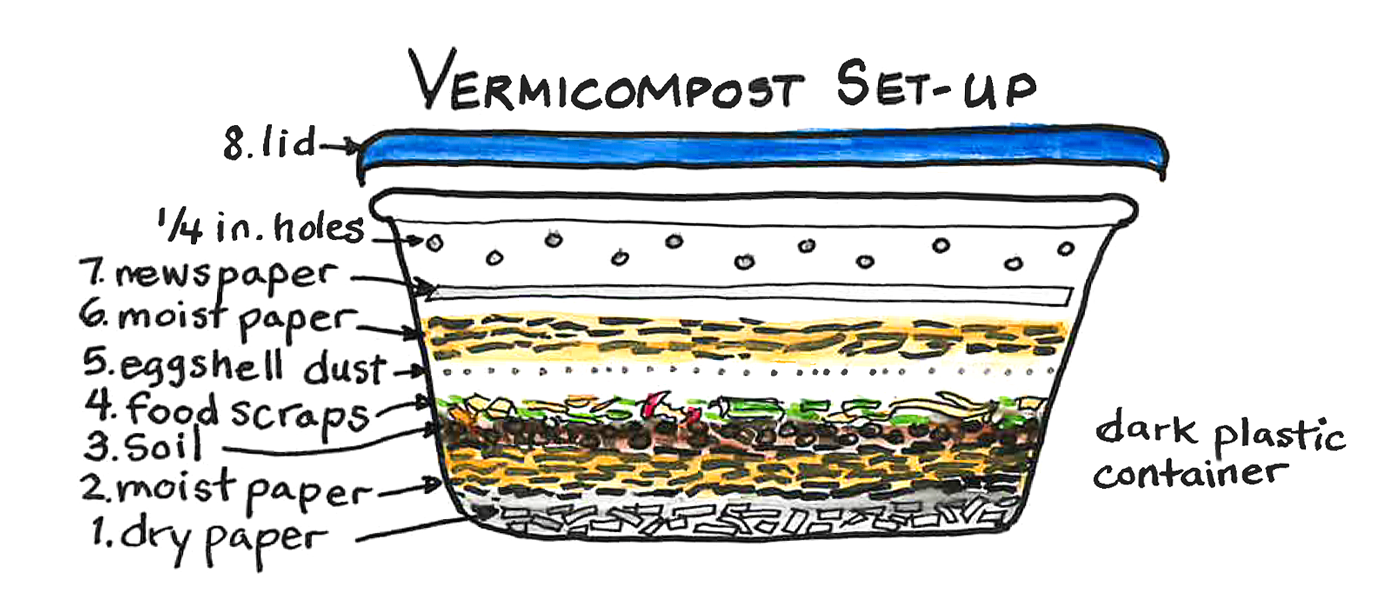
Setting Up Your First Bin
Step-by-Step Setup:
-
Drill Holes
- Drainage: 1/4" holes every 3-4 inches in bottom
- Ventilation: 1/8" holes around sides near top
- Cover with mesh to prevent escapes
-
Add Bedding (4-6 inches)
- Shredded newspaper (most common)
- Cardboard strips
- Coconut coir
- Shredded office paper
- Dry leaves
- Mix of above is best!
-
Moisten Bedding
- Spray with water until damp
- Like a wrung-out sponge
- Not dripping wet!
-
Add Worms
- Gently place on top of bedding
- They'll burrow down (away from light)
- Don't disturb for 24 hours
-
Wait 3-5 Days Before First Feeding
- Let worms acclimate
- They'll eat bedding initially
- This reduces stress
Part 2: Feeding Your Worms
What Worms Love
Green Light Foods:
- Fruit scraps (no citrus)
- Vegetable peels and scraps
- Coffee grounds and filters
- Tea bags (remove staples)
- Crushed eggshells
- Cooked pasta and rice (small amounts)
- Bread (small amounts)
- Shredded paper/cardboard
Yellow Light Foods (Use Sparingly):
- Citrus (small amounts, chopped fine)
- Onions and garlic
- Spicy peppers
- Salty foods
- Acidic foods
Red Light Foods (Never Add):
- Meat and fish
- Dairy products
- Oils and grease
- Pet waste
- Diseased plants
Feeding Schedule
Frequency:
- Beginners: Once per week
- Established bins: 2-3 times per week
- Advanced: Small amounts daily
Amount:
- Start with 1/4 lb food per lb of worms per week
- Gradually increase to 1/2 lb per lb per week
- Never add more until previous feeding is 75% gone
Preparation:
- Chop into small pieces (1-2 inches)
- Smaller pieces = faster decomposition
- Freeze-thaw cycle speeds breakdown
Burial Method:
- Dig small hole in bedding
- Add food
- Cover with 2-3 inches of bedding
- Rotate locations each feeding
Part 3: Maintenance
Daily Tasks
- Quick visual check (if convenient)
- Note any issues
Weekly Tasks
- Feed worms
- Check moisture level
- Add bedding if needed
- Remove any problem areas
Monthly Tasks
- Fluff/mix bedding
- Check for pests
- Assess worm population
- Harvest castings if ready
Seasonal Tasks
- Spring: Divide overcrowded bins, increase feeding
- Summer: Monitor temperature, add cooling measures
- Fall: Prepare for winter, harvest castings
- Winter: Reduce feeding, insulate bins
Part 4: Troubleshooting
Worms Trying to Escape
Causes:
- Bin too wet or dry
- Too acidic (excess citrus/tomatoes)
- Not enough food
- Too much food (anaerobic)
- Temperature extremes
Solutions:
- Adjust moisture
- Add eggshells to neutralize pH
- Adjust feeding amount
- Check temperature
Fruit Flies
Prevention:
- Always bury food
- Add dry bedding on top
- Don't overfeed
Treatment:
- Stop feeding 1 week
- Add thick layer dry bedding
- Set up vinegar traps
- Freeze food before adding
Mites
White/Brown Mites (Harmless):
- Indicate too much food or moisture
- Reduce feeding
- Add dry bedding
- Usually self-correct
Red Mites (Problematic):
- Remove affected areas
- Add dry bedding
- Reduce moisture
- May need to restart bin
Ants
Prevention:
- Keep bin dry (ants hate moisture)
- Elevate bin, legs in water
- Remove sweet foods
Treatment:
- Increase moisture
- Remove ant trails
- Diatomaceous earth around bin
Part 5: Harvesting Castings
When to Harvest
Signs It's Time:
- Bedding mostly gone
- Dark, crumbly texture throughout
- Worms seem crowded
- 3-6 months since setup
Harvesting Methods
1. Dump and Sort (Easiest)
- Dump contents on tarp
- Pick out worms by hand
- Time-consuming but thorough
2. Light Method (Most Popular)
- Dump contents in cone-shaped pile
- Shine bright light on top
- Worms burrow down
- Scrape off top layer every 10-15 minutes
- Repeat until only worms remain
3. Side-to-Side Method (Least Disruptive)
- Push all contents to one side
- Add fresh bedding to empty side
- Feed only on new side
- Wait 2-3 weeks
- Worms migrate to new side
- Harvest old side
4. Screen Method (Fastest)
- Use 1/4" hardware cloth screen
- Rub castings through screen
- Worms and large pieces stay on top
- Return worms to bin
Part 6: Using Your Castings
As Soil Amendment
Garden Beds:
- Work in 1-2 inches before planting
- Side-dress established plants monthly
Container Plants:
- Mix 25% castings with potting soil
- Top-dress with 1-2 tablespoons monthly
Lawns:
- Spread 10-20 lbs per 1,000 sq ft
- Water in thoroughly
Seed Starting:
- Mix 1 part castings to 3 parts seed mix
- Improves germination rates
Making Worm Tea
Brewing Method:
- Fill 5-gallon bucket with water
- Add 2 cups worm castings in mesh bag
- Add 1 tablespoon molasses (feeds microbes)
- Aerate with aquarium pump 24-48 hours
- Strain and use immediately
Application:
- Foliar spray: Dilute 1:10 with water
- Soil drench: Dilute 1:5 with water
- Apply every 2 weeks during growing season
Benefits:
- Immediate nutrient availability
- Introduces beneficial microbes
- Improves disease resistance
- Boosts plant growth
Part 7: Advanced Techniques
Continuous Flow-Through Systems
- Harvest from bottom without disturbing worms
- Add bedding and food to top
- Castings naturally migrate down
- Most efficient for large-scale operations
Outdoor Windrow Composting
- For very large quantities
- Create long rows (windrows)
- Turn regularly
- Commercial-scale method
Breeding for Profit
- Separate breeding bins
- Optimal conditions for reproduction
- Harvest cocoons
- Sell worms and castings
Integration with Other Systems
- Aquaponics (worms process fish waste)
- Chicken coops (worms process manure)
- Bokashi (pre-ferment food scraps)
Part 8: 2025 Trends and Innovations
Smart Bin Technology
- Temperature and moisture sensors
- Automated feeding systems
- Mobile app monitoring
- Still experimental but promising
Community Composting
- Neighborhood worm bins
- School programs
- Municipal programs
- Growing rapidly!
Worm Castings as Carbon Sequestration
- Research shows significant carbon capture
- Potential carbon credit programs
- Environmental impact beyond gardening
Your Vermicomposting Success Checklist
✓ Choose right worm species for your climate
✓ Start with appropriate bin size
✓ Set up proper bedding and drainage
✓ Feed appropriate amounts on schedule
✓ Maintain proper moisture (wrung-out sponge)
✓ Monitor temperature (55-77°F ideal)
✓ Add fresh bedding regularly
✓ Bury all food under bedding
✓ Harvest castings every 3-6 months
✓ Use castings and tea in garden
✓ Troubleshoot problems quickly
✓ Join online communities for support
Conclusion
Vermicomposting is a journey, not a destination. Your first bin might have some hiccups, but don't give up! The rewards - incredible compost, reduced waste, thriving gardens, and the satisfaction of closing the loop on your food waste - are absolutely worth it.
Welcome to the wonderful world of worm composting. Your garden (and the planet) will thank you!
Have questions? Contact us at Sunshine Worm Farm - we're here to help you succeed!
Found this helpful? Share it with fellow gardeners!