
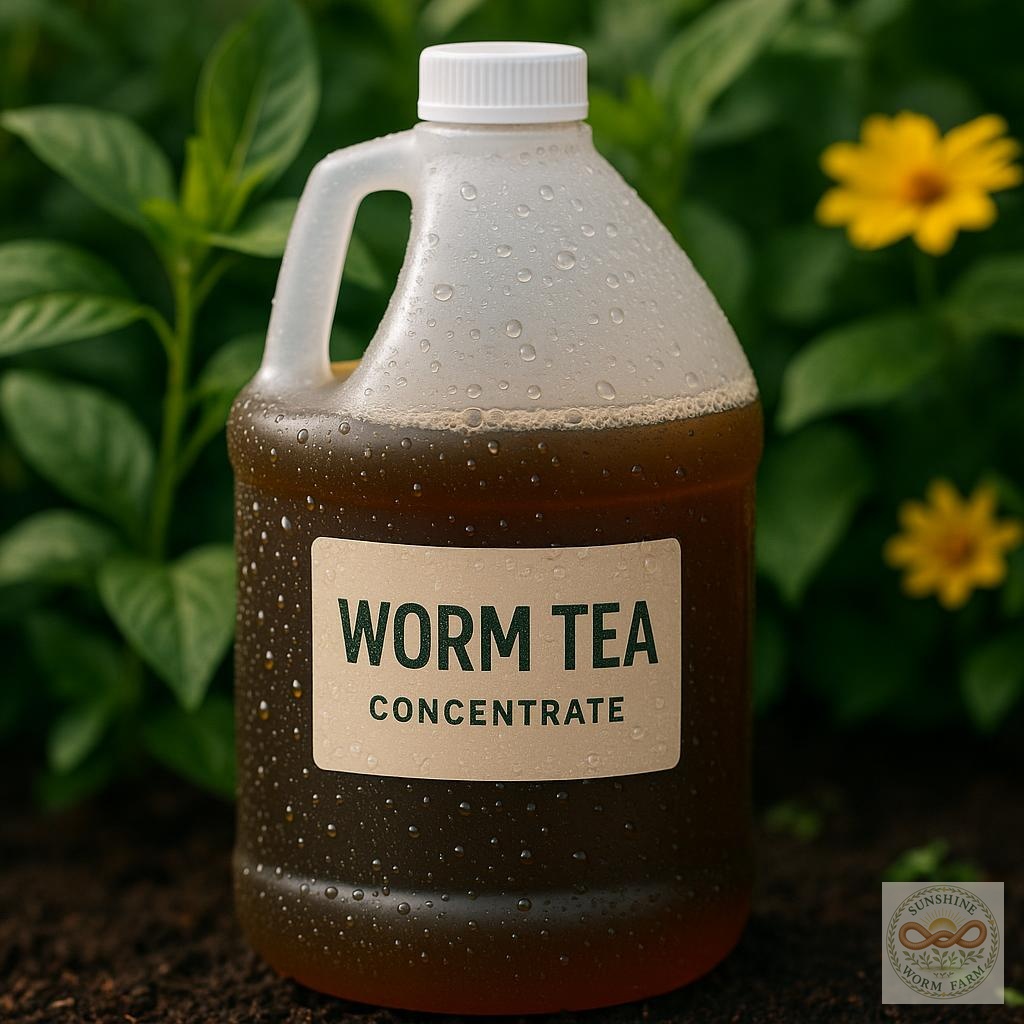
Worm Tea: Liquid Gold for Your Garden
Worm Tea: Liquid Gold for Your Garden
Worm tea is a liquid fertilizer created by extracting nutrients and beneficial microorganisms from worm castings. It's one of the most effective organic fertilizers available, delivering an instant boost of nutrition and beneficial biology directly to plant roots and foliage. Unlike solid worm castings that release nutrients gradually over time, worm tea provides immediate benefits while inoculating your garden with billions of beneficial microorganisms that improve soil health and plant vitality.
The power of worm tea lies in its dual nature—it's both a fertilizer and a biological inoculant. The liquid contains water-soluble nutrients that plants can absorb immediately, providing a quick green-up and growth boost. Simultaneously, the tea delivers beneficial bacteria, fungi, protozoa, and nematodes that colonize the rhizosphere (root zone) and leaf surfaces, creating a protective biological shield against diseases while improving nutrient cycling.
Understanding Worm Tea vs. Worm Leachate
It's crucial to distinguish between true worm tea and worm bin leachate, as these are fundamentally different products with very different uses. Worm leachate is the liquid that drains from the bottom of worm bins—it's essentially the runoff from decomposing organic matter. While leachate contains some nutrients, it can also harbor anaerobic bacteria and pathogens from incompletely decomposed food scraps. Leachate should be diluted heavily if used at all, and never applied to edible crops.
True worm tea, by contrast, is made by steeping finished worm castings in water, often with aeration to promote beneficial aerobic microorganisms. The controlled brewing process ensures that only beneficial organisms multiply while pathogens are outcompeted. Quality worm tea should smell earthy and pleasant—never putrid or sulfurous, which would indicate anaerobic conditions.
The Science Behind Worm Tea
When worm castings are steeped in water, water-soluble nutrients dissolve into the liquid, creating a nutrient-rich solution. Simultaneously, microorganisms from the castings are suspended in the water where they can multiply rapidly if conditions are favorable. Aerated worm tea (also called actively aerated compost tea or AACT) uses an air pump to maintain high oxygen levels, promoting the growth of beneficial aerobic organisms while suppressing anaerobic pathogens.
The microbial population in quality worm tea is staggering. A single milliliter can contain millions of bacteria, thousands of beneficial fungi, and hundreds of protozoa. These organisms form complex food webs that cycle nutrients, suppress diseases, and improve soil structure. When applied to plants, they colonize root surfaces and leaf tissues, creating a living barrier against pathogens while enhancing the plant's ability to access nutrients.
Research has documented numerous benefits of worm tea applications. Studies show increased plant growth rates of 20-30%, improved disease resistance, enhanced drought tolerance, and higher crop yields. The effects are most pronounced in depleted soils where microbial populations have been reduced by chemical fertilizers, pesticides, or intensive cultivation. Worm tea essentially reinoculates the soil with the biological diversity needed for optimal plant health.
Making Non-Aerated Worm Tea
The simplest method for making worm tea requires only worm castings, water, and time. This non-aerated approach produces a nutrient-rich liquid that's excellent for soil drenching, though it won't have the high microbial populations of aerated tea. Non-aerated tea is perfect for gardeners who want the nutritional benefits of worm castings in liquid form without investing in brewing equipment.
To make non-aerated worm tea, place one cup of fresh worm castings in a mesh bag or old sock and suspend it in one gallon of non-chlorinated water. Rainwater is ideal, but tap water works if you let it sit overnight to allow chlorine to dissipate. Let the castings steep for 24-48 hours, occasionally squeezing the bag to release more nutrients. The resulting tea should be light brown, similar to weak coffee.
Use non-aerated tea within a few hours of brewing, as the microbial populations will begin to decline once oxygen in the water is depleted. Apply the tea as a soil drench around the base of plants, using it at full strength for most applications. You can dilute it 1:1 with water if desired, though this isn't necessary—worm tea is gentle enough to use at full strength without burning plants.
Making Aerated Worm Tea
Aerated worm tea requires more equipment but produces a superior product with exponentially higher populations of beneficial microorganisms. The continuous aeration maintains oxygen levels that allow aerobic bacteria and fungi to multiply rapidly, creating a living liquid teeming with beneficial biology. This is the method preferred by serious organic gardeners and commercial growers who want maximum biological benefits.
The basic equipment includes a five-gallon bucket, an aquarium air pump (rated for at least 10 gallons), an airstone, and tubing to connect them. You'll also need worm castings, non-chlorinated water, and optionally, a microbial food source like unsulfured molasses. The molasses feeds the microorganisms during brewing, allowing them to multiply to even higher populations.
Start with five gallons of non-chlorinated water in your bucket. Add one to two cups of fresh worm castings in a mesh bag, suspended in the water. Add one to two tablespoons of unsulfured molasses to feed the microbes. Place the airstone at the bottom of the bucket and turn on the pump. The water should be vigorously bubbling—you want as much oxygen as possible dissolved in the water.
Brew the tea for 24-48 hours, maintaining constant aeration. The tea is ready when it develops a pleasant earthy smell and a light foam forms on the surface. This foam is actually billions of bacteria—a sign that your tea is biologically active. Use aerated tea immediately after brewing, as the microbial populations will crash within hours once aeration stops and oxygen is depleted.
Optimal Brewing Conditions
Temperature significantly affects brewing time and microbial populations. Warm temperatures (68-80°F) speed up microbial reproduction, allowing you to brew tea in 24 hours. Cooler temperatures slow the process—you may need 36-48 hours at 60°F. Avoid brewing in temperatures above 85°F, as this can favor less beneficial organisms and reduce oxygen solubility in water.
Water quality matters more than many gardeners realize. Chlorinated tap water can kill beneficial microorganisms, undermining the entire purpose of brewing tea. If using tap water, let it sit in an open container for 24 hours to allow chlorine to dissipate, or use a dechlorinating product from an aquarium supply store. Well water is generally fine unless it's been treated with chlorine. Rainwater is ideal if you have access to it.
The ratio of castings to water affects both nutrient concentration and microbial density. A ratio of 1:20 (one part castings to 20 parts water) provides good results for most applications. You can increase this to 1:10 for a more concentrated tea, though you won't necessarily double the benefits. The castings must be fresh—ideally less than six months old—as microbial populations decline in stored castings.
Application Methods
Worm tea can be applied as either a soil drench or foliar spray, each method offering distinct benefits. Soil drenching delivers nutrients and microorganisms directly to the root zone, where they can colonize root surfaces and improve nutrient uptake. This method is excellent for established plants and is the safest approach for edible crops, as there's no risk of contaminating the harvested portions.
Apply soil drenches by pouring tea around the base of plants, saturating the root zone. Use approximately one gallon of tea per 100 square feet of garden bed, or 1-2 cups per container plant. Water the area lightly after application to help the tea penetrate into the soil. The beneficial microorganisms will establish in the rhizosphere, providing benefits for weeks after application.
Foliar spraying applies tea directly to leaf surfaces, where nutrients can be absorbed through stomata and beneficial microorganisms can colonize the phyllosphere (leaf surface). This method provides the fastest nutrient response and excellent disease suppression, as beneficial organisms outcompete pathogens on leaf surfaces. However, foliar application requires more care to avoid contamination of edible crops.
For foliar application, strain the tea through cheesecloth or a fine mesh to remove particles that could clog spray equipment. Apply in early morning or evening when stomata are open and temperatures are cool. Spray until leaves are thoroughly wet but not dripping. Avoid spraying during hot, sunny periods, as this can cause leaf burn. For edible crops, stop foliar applications at least two weeks before harvest to ensure food safety.
Application Timing and Frequency
The timing of worm tea applications can significantly impact their effectiveness. Apply tea during active growth periods when plants can best utilize the nutrients and when beneficial microorganisms can establish most effectively. For vegetables, apply at transplanting, during rapid vegetative growth, and at flowering. For perennials and shrubs, apply in early spring as growth begins and again in mid-summer.
Frequency depends on your goals and growing conditions. For general maintenance in healthy soils, monthly applications provide excellent results. In depleted soils or for heavy-feeding crops, apply every two weeks during the growing season. Container plants benefit from weekly applications, as nutrients leach quickly from potting mixes. Lawns can be treated monthly during the growing season using a hose-end sprayer.
Seasonal timing matters as well. In Florida's climate, focus applications during the main growing seasons—spring and fall—when temperatures are moderate and plants are actively growing. Reduce frequency during the hot summer months when many plants slow their growth. Winter applications are generally unnecessary except for cool-season crops.
Enhancing Your Worm Tea
While worm castings alone make excellent tea, you can enhance the brew with additional ingredients that feed specific microbial groups or provide additional nutrients. Unsulfured molasses is the most common additive, providing simple sugars that bacteria love. Use one to two tablespoons per five gallons of tea. Avoid sulfured molasses, as the sulfur can inhibit beneficial bacteria.
Kelp meal or liquid kelp adds trace minerals, growth hormones, and food for beneficial fungi. Add one tablespoon of kelp meal or one teaspoon of liquid kelp per five gallons of tea. The kelp also contains compounds that stimulate plant immune responses, enhancing disease resistance beyond what microorganisms alone provide.
Rock dust or glacial rock flour provides mineral nutrients and food for mineral-solubilizing bacteria. Add one tablespoon per five gallons. These bacteria break down rock particles, releasing locked-up minerals in plant-available forms. Over time, they can significantly improve soil mineral nutrition.
Fish hydrolysate adds nitrogen and feeds beneficial bacteria, though it can create odor issues. Use sparingly—one tablespoon per five gallons is sufficient. The fish proteins provide amino acids that plants can absorb directly, along with nitrogen for growth. Only use fish hydrolysate in soil drenches, never foliar sprays, due to food safety concerns.
Troubleshooting Common Problems
Foul odors during brewing indicate anaerobic conditions—the aeration isn't sufficient or has failed. Anaerobic tea can harm plants and should be discarded. Check that your air pump is working and producing vigorous bubbling. You may need a stronger pump or additional airstones. Clean all equipment thoroughly before brewing again.
Lack of foam after 24-48 hours of brewing suggests low microbial activity. This can result from old castings with depleted microbial populations, chlorinated water killing organisms, or temperatures too cool for rapid reproduction. Use fresher castings, ensure water is dechlorinated, and try brewing in a warmer location.
Slimy or thick tea indicates excessive bacterial growth, often from too much molasses or other food sources. While not necessarily harmful, this tea may clog sprayers and isn't ideal for foliar application. Reduce molasses to one tablespoon per five gallons and ensure adequate aeration. The tea should remain liquid, not gel-like.
Storage and Shelf Life
Worm tea is a living product that must be used fresh for maximum benefit. Aerated tea should be applied within 4-6 hours of brewing for optimal microbial populations. After this window, oxygen depletion causes beneficial aerobic organisms to die off rapidly. Non-aerated tea can be stored for up to 24 hours if kept cool and out of direct sunlight.
If you must store tea briefly, keep it in a cool, dark location and maintain some aeration if possible. Even a small aquarium pump can keep microorganisms alive for an extra day or two. However, the microbial populations will never be as high as in freshly brewed tea. It's better to brew smaller batches more frequently than to brew large batches and store them.
Frozen worm tea loses most of its microbial benefits, though the nutrients remain intact. If you have excess tea, you can freeze it for later use as a nutrient source, but don't expect the biological benefits. Alternatively, use excess tea to water houseplants, trees, or shrubs—nothing is wasted.
Safety Considerations
When properly brewed from quality castings, worm tea is safe for use on all plants, including edible crops. However, food safety requires some precautions, particularly for foliar applications. Never spray tea on the edible portions of crops within two weeks of harvest. For root crops and low-growing vegetables, use soil drenches only to avoid splashing tea onto edible parts.
Always use finished, well-aged worm castings for brewing tea—never fresh worm bin contents or incompletely composted material. These can contain pathogens that survive in the tea. The castings should be dark, crumbly, and earthy-smelling with no recognizable food scraps remaining.
Maintain proper aeration throughout the brewing process to ensure aerobic conditions. Anaerobic tea can contain harmful bacteria and should never be used on edible crops. If your tea smells foul or sulfurous, discard it and start over with proper aeration.
Comparing Worm Tea to Other Liquid Fertilizers
Worm tea offers unique advantages over both synthetic liquid fertilizers and other organic options. Synthetic fertilizers provide only chemical nutrients—they contain no beneficial microorganisms and don't improve soil health. Over time, synthetic fertilizers can actually degrade soil biology by providing nutrients in forms that bypass natural soil processes.
Compared to compost tea made from regular compost, worm tea typically has higher nutrient concentrations and more diverse microbial populations. Worm castings pass through the worm's gut where beneficial bacteria multiply, creating a more biologically active starting material. The nutrient profile is also more balanced, with better ratios of nitrogen, phosphorus, and potassium.
Fish emulsion and seaweed extracts provide excellent nutrition but lack the microbial diversity of worm tea. These products work well in combination with worm tea—the fish or seaweed provides quick nutrition while the worm tea delivers long-term biological benefits. Many gardeners alternate applications or mix products for comprehensive plant nutrition.
Conclusion
Worm tea represents the cutting edge of organic gardening—a way to deliver both nutrition and beneficial biology in a form that plants can use immediately. Whether you choose simple non-aerated tea for its nutritional benefits or invest in equipment for fully aerated biological tea, you'll see remarkable improvements in plant health, growth, and resilience. The practice connects you to the living soil food web while providing tangible results in your garden.
Start brewing worm tea today with premium worm castings from Sunshine Worm Farm. Our Florida-raised worms produce castings teeming with beneficial microorganisms perfectly adapted to our climate. We also offer complete tea brewing kits with everything you need to make professional-quality aerated worm tea. Browse our selection and discover why worm tea truly is liquid gold for your garden.
Found this helpful? Share it with fellow gardeners!